![Andrea Venzon [English]](https://substackcdn.com/image/fetch/$s_!_TTE!,w_120,h_120,c_fill,f_webp,q_auto:good,fl_progressive:steep/https%3A%2F%2Fsubstack-post-media.s3.amazonaws.com%2Fpublic%2Fimages%2Facd73441-dd62-4692-b623-54f4cf7c2bb7_1231x1231.png)
Why Everything Feels Out of Control - and Why That’s Not an Accident

Many of us feel confused right now. Overwhelmed. Unable to keep up with the sheer volume of news crashing into our lives every day. It feels harder than ever to make sense of what matters, what is noise, and what deserves our attention. That sensation - of being permanently behind, permanently alarmed - is not a personal weakness. It is a rational response to a world that seems to be accelerating out of control.
What makes it worse is how early it still is. We are barely twenty days into 2026, and yet the year already feels saturated. In just a few weeks we have witnessed the kidnapping of Nicolás Maduro, new waves of protests shaking Iran, and renewed threats over Greenland coming from Donald Trump among many other significant pieces of news. Any one of these events, taken alone, would normally dominate the political conversation for months. Together, they collapse into a constant state of emergency. Feeling lost in this context is normal.
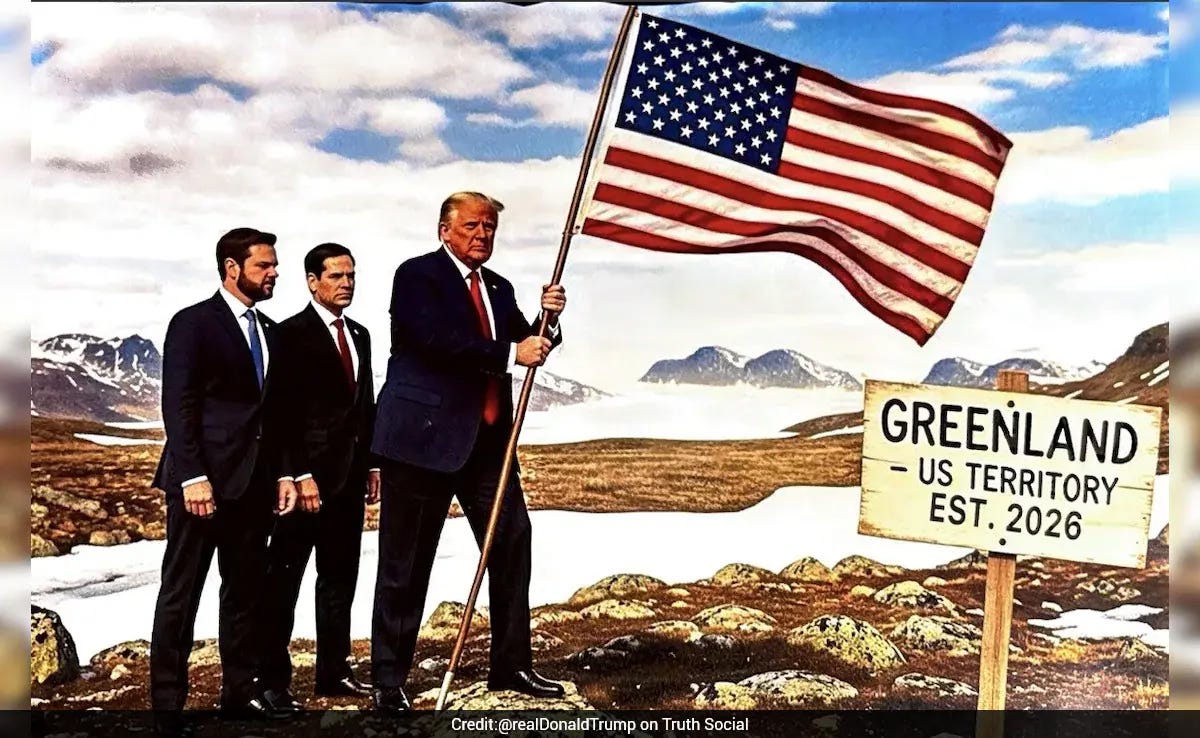
Authoritarian leaders understand this very well. Chaos is not a by-product of their politics; it is a tool. When figures like Trump sense that their grip on power is weakening - when the economy underperforms, when discontent grows among their own supporters, when elections loom - they escalate. They flood the public sphere with extreme statements, sudden threats, and deliberately divisive positions. The aim is not coherence. It is saturation.
This strategy serves two purposes at once. On the one hand, it forces their base to close ranks. Even their voters who are unhappy with concrete outcomes are pulled back in by a sense of siege, loyalty, or cultural war. On the other hand, it traps the opposition in a permanent reactive mode, chasing the latest outrage, dissecting the newest provocation, and arguing endlessly about yesterday’s absurdity instead of tomorrow’s alternatives.
In this environment, confusion becomes contagious. People disengage not because they don’t care, but because caring feels exhausting. Reality itself starts to feel unstable, and when everything appears chaotic, strongmen present themselves as the only source of “order.” This is how disorientation turns into political power.
That is why recognizing the pattern matters. Once we understand that overwhelm is intentional, it becomes easier to resist its effects. Confusion stops being proof that “nothing makes sense anymore” and starts being evidence that someone benefits from it not making sense.
And here is the crucial point: leaders like Trump do not have unlimited power. They cannot destroy our future by force of personality or volume alone. Their strength depends on fragmentation - on people feeling isolated, tired, and resigned. It depends on the belief that resistance is futile and that democracy is too weak to respond. History tells a different story.
If we stay close to one another, if we refuse to let confusion turn into apathy, if we keep our focus on what actually shifts power - elections, institutions, accountability- then the noise loses its grip. Authoritarians fear not outrage, but persistence. Not panic, but organization. Not chaos, but clarity. Confusion is part of the game.
So take a big breath, follow the news with a critical eye, get out and protest, vote, and do not get discouraged, ever. Focus is how we win it.
My name is Andrea Venzon. I am a political activist, and I write to help build an independent political space - free from the blackmail of great powers and from resignation. If you like what you read, subscribe. And if you can, become a paid subscriber: it’s what allows me to keep writing, analyzing, and taking positions without masters.