![Andrea Venzon [English]](https://substackcdn.com/image/fetch/$s_!_TTE!,w_120,h_120,c_fill,f_webp,q_auto:good,fl_progressive:steep/https%3A%2F%2Fsubstack-post-media.s3.amazonaws.com%2Fpublic%2Fimages%2Facd73441-dd62-4692-b623-54f4cf7c2bb7_1231x1231.png)
Why being anti-imperialist today is a duty.

There is a reality that some still prefer not to accept: empires are back.
Not the ones from history textbooks, but contemporary powers - technological, militarized, and convinced that force matters more than any rule. We live in a world where international law ceases to exist the moment it becomes inconvenient for those who dominate, as happened during the genocide in Gaza or with the invasion of Ukraine.
This is not a failure of the system: it is how the system actually works. A logic embedded in the very organization that, more than any other, should protect international law - the United Nations - where five countries, past and present superpowers (France, the United Kingdom, the United States, Russia, and China), hold veto power in the Security Council. In the past, these states at least pretended to uphold a functioning international order. Today, even that pretense is gone.
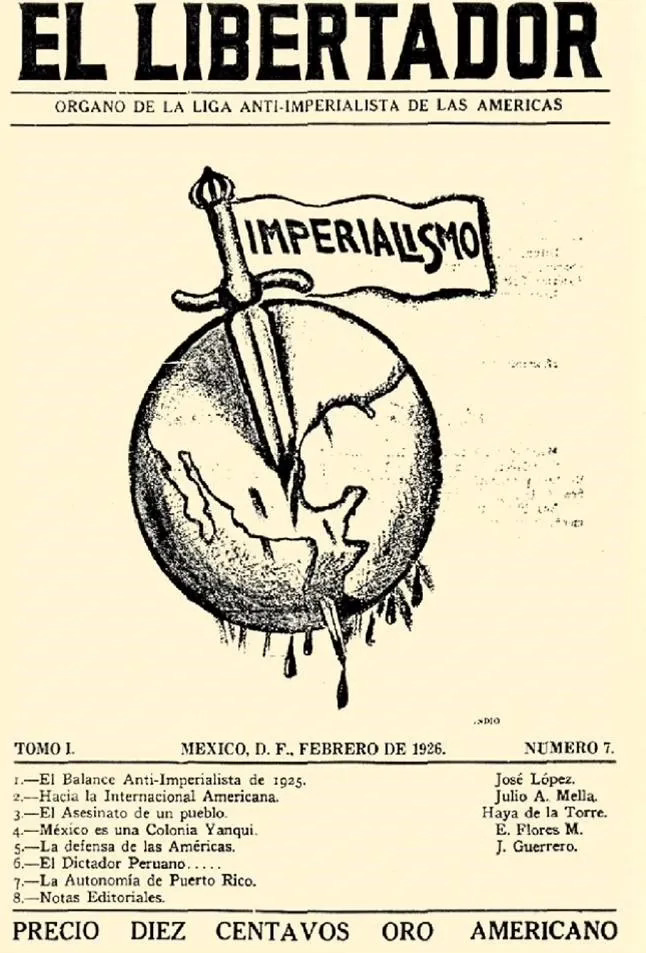
Just look around. The United States invades Venezuela, threatens Greenland, topples unfriendly governments, and demands obedience from its allies. China treats Taiwan as a province to be annexed, deliberately ignoring the will of millions of people. Russia, a declining empire but still armed to the teeth, has invaded Ukraine to reassert a sphere of dominance it wants to make permanent. In this scenario, superpowers behave like global warlords, and rules apply only to those who lack the strength to break them.
Several democratic nations, in all of this, are not neutral spectators. They are vassals.
Let’s take Europe as an example. For decades, many European societies have lived under the umbrella - and control - of the United States. In the aftermath of the Second World War, this dependence may have had a rationale: liberation from Nazi-fascism and massive reconstruction efforts such as the Marshall Plan. Today, generations later, it has turned into a chronic condition of political subordination.
Across Europe, the United States alone operates around 40 military bases, hosting approximately 80,000–100,000 U.S. military personnel. In addition, Europe hosts an estimated ~100 U.S. B61 tactical nuclear bombs, deployed under NATO’s so-called “nuclear sharing” arrangements at six air bases in five countries: Belgium, Germany, Italy, the Netherlands, and Turkey. These weapons remain under exclusive U.S. control, are not subject to national democratic oversight, and in many cases are not even fully accountable within NATO, where host countries supposedly have a voice. Foreign forces and arsenals that have likely played direct or indirect roles in wars and massacres supported by dominant powers, including the ongoing one in Gaza.
Many European governments not only lack the courage to condemn these abuses, but preemptively align themselves. Their leaders compete to display loyalty to powerful figures, kowtowing at every possible occasion. A particularly striking example is Italy’s prime minister, Giorgia Meloni, who broke long-standing diplomatic convention to attend Donald Trump’s inauguration - only to receive no political favors or strategic benefits in return. And despite these politically humiliating gestures, European nations continue to be treated with contempt by Trump and similar figures, gaining no real leverage or protection.
Let us be clear: many democratic nations no longer have an independent foreign policy. And this is not the result of hard-nosed realism, but of pure servility.
Few would disagree with this diagnosis. The real question is: what can be done?
Continue along the path of vassalage, hoping that the Third World War will not be fought on our soil? A rather naïve hope, given the geopolitical positions many democratic countries occupy - caught between rival spheres of influence and only hours away from some of the world’s most unstable regions.
Or behave like the other empires, trying to build new ones - continuing the European example, perhaps through a fully integrated and militarized European Union? The temptation is understandable. Yes, Europe must develop autonomous technological infrastructure, real defensive capacity, and genuine economic sovereignty. It must integrate more deeply to withstand the turbulence ahead. But not in order to repeat the same mistakes that are devastating the world.
Europe - and any other emerging power - should become a pole of hope, not a new empire. A reference point for all nations that refuse to be subjugated by superpowers. Strong not to conquer, but to protect and to open itself - especially toward younger, more dynamic, and more alive societies than its aging ones. This, in my view, is the only foreign-policy direction that can lead us out of this impasse.
And this direction has a clear name: anti-imperialism.
Europe, democratic nations, and any country that hopes for a prosperous and peaceful future must adopt an anti-imperialist foreign policy.
To be anti-imperialist means:
rejecting all forms of political, military, and economic domination by superpowers;
diplomatically, economically, and militarily boycotting contemporary empires;
disentangling our economies, technologies, and infrastructures from their leverage and blackmail by building alternative networks;
resisting pressure, even when it comes at a cost;
actively supporting peoples and countries that are threatened or attacked.
Yes, such a policy will cost us prosperity. It will take time before opposing a power like the United States no longer affects, for example, our financial sectors. Limiting or sanctioning China will mean higher prices, consuming less, producing differently, and changing our economic model. Yes, it will not be easy.
But in the inevitable chaos that this new age of empires will produce, only those who have defended their own dignity - and that of other peoples - will emerge on the other side as true winners.
Anti-imperialism is not an ideological pose. It is a duty.
It was a duty for the peoples who freed themselves from colonial domination in the twentieth century. It is a duty today for Ukrainians defending their freedom; for Palestinians who continue to resist even when hope seems extinguished; for the students of Hong Kong who sacrificed youth and liberty for the dream of a democratic city. Today, that responsibility falls on us.
I want democratic nations to be anti-imperialist.
And if governments continue to behave like lackeys of dominant powers, it will be essential to fight every day - and at the ballot box - so that those who come after choose the right side of history. Anti-imperialism today is the only coherent position for anyone who wants to defend the dignity of every person, everywhere. It is not nostalgia, not extremism, not utopia. It is the only rational stance in a world that is rapidly returning to the law of the strongest.
If this vision resonates with you, tell me what you think in the comments.
And if you can, subscribe: building an independent political space today is already, in itself, an act of resistance.
My name is Andrea Venzon. I am a political activist, and I write to help build an independent political space - free from the blackmail of great powers and from resignation. If you like what you read, subscribe. And if you can, become a paid subscriber: it is what allows me to keep writing, analyzing, and taking a stand without masters.