![Andrea Venzon [English]](https://substackcdn.com/image/fetch/$s_!_TTE!,w_120,h_120,c_fill,f_webp,q_auto:good,fl_progressive:steep/https%3A%2F%2Fsubstack-post-media.s3.amazonaws.com%2Fpublic%2Fimages%2Facd73441-dd62-4692-b623-54f4cf7c2bb7_1231x1231.png)
We Built Green Parties to protect the Environment. Where Is the Party for the AI Age?

There is something strange about election campaigns these days. Politicians talk about immigration, taxes, security, national identity - everything that divides, inflames, and mobilises - and yet almost none of them has anything serious to say about the technology that is simultaneously redrawing the nature of work, the distribution of power, the concentration of wealth, the conduct of war, and the foundations of democracy itself.
Artificial intelligence is already here, and it has been for a while. It is not science fiction, and it is not a problem for the future. It is the system that already wrote your insurance contract, assessed your credit application, screened your CV, and decided what news you see - and yet it barely appears in electoral platforms, almost never surfaces in televised debates, and when it does enter public discourse at all, it is treated as a technological curiosity rather than a central political question.
Why?
History suggests an answer, and it is not a flattering one for the political class.
Every major technological transformation has eventually generated a political response. The Industrial Revolution moved millions of people from countryside to factory, created working conditions of extraordinary brutality, and concentrated wealth in a small number of hands - and the response, when it came, took the form of labour movements, trade unions, socialist parties, and workplace legislation that reshaped the political landscape of the twentieth century. The environmental crisis, decades later, produced something similar: Green parties, international conventions, and climate policy frameworks that, however imperfect and inadequate, exist because someone decided the problem was large enough to deserve an institutional response.
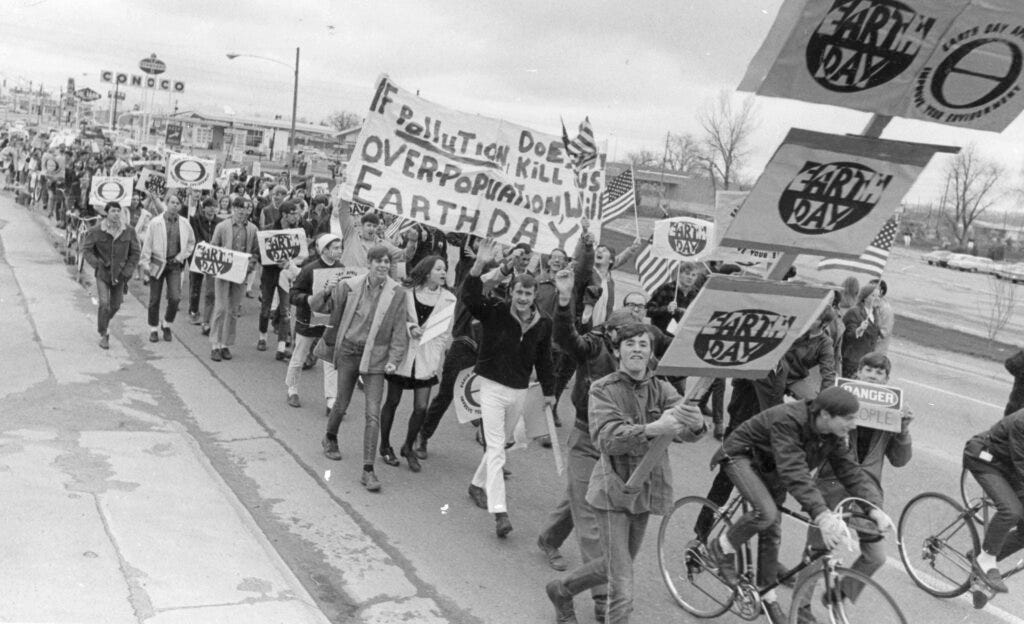
Where is the equivalent response to artificial intelligence? It does not exist - or rather, there is some technical regulation at the margins, some parliamentary committee, some statement of principle, but nothing resembling a movement, a political force, or a credible programme that puts the fundamental questions this transformation raises at the centre of democratic debate.
My hypothesis is an uncomfortable one: politicians are either too unprepared or too self-interested to act.
Unprepared, because technology is genuinely complex and the political class is largely composed of (old) lawyers, economists, and communications professionals who have little understanding of how a language model works or what it means to train a system on billions of data points - and it is, of course, always easier to talk about what you already know. But beyond mere ignorance, there is something more structural at work. Artificial intelligence is not just a technology that politicians fail to understand; it is a direct threat to many of the entrenched interests on which traditional politics has always depended.
Consider what AI in government actually promises at its best: the eradication of administrative corruption, the automation of bureaucracy, the radical transparency of public processes. Less discretion in how public resources are allocated means less power for those who live off favours, contracts, and opaque intermediation - and for a significant portion of the political class, genuinely embracing AI governance would mean dismantling the very structures through which they exercise influence. So better, from their perspective, not to talk about it at all, and to let the transformation proceed in the shadows, managed by private companies without democratic mandate, while politics occupies itself with more comfortable terrain.
Meanwhile, the transformation accelerates with or without political engagement.
The displacement of workers has already begun, though not primarily in the dramatic form of robots replacing factory operatives that has dominated the public imagination. It is happening in call centres and law firms, in newsrooms and accounting offices - cognitive work, not just manual labour, and middle-class jobs, not only those of the most economically vulnerable. Conservative estimates suggest that tens of millions of positions across Europe and North America will undergo radical change within the next decade, with some professions disappearing entirely and others requiring such complete retraining as to amount to the same thing.
Who is building the safety nets for those who will lose their livelihoods through this transition? Who is designing the fiscal frameworks to tax the extraordinary gains that will accrue to those who own the machines - and to redistribute that wealth toward those who bear the costs? At the same time, the companies controlling the most powerful models are accumulating computing capacity, proprietary data, and market power at a speed without historical precedent, forming technological monopolies that within a few years may be more powerful than many nation states. This is not speculation; it is the straightforward application of industrial economics to a technology characterised by increasing returns and near-insurmountable barriers to entry.
There is, though, another side to this story, and intellectual honesty requires telling it.
Artificial intelligence does not only bring risks - it brings extraordinary opportunities that a serious politics could embrace. Better diagnostics in public healthcare, more personalised and effective education, accelerated scientific research, far more efficient management of public services: these are not marketing claims but genuine possibilities that are already beginning to materialise in places that have chosen to govern AI rather than ignore it. And yes, as noted above: the same technology that threatens entrenched political interests also offers the possibility of a more transparent, less corrupt, more responsive state - faster, fairer, and more accountable to the people it is supposed to serve.
But none of these opportunities realise themselves without deliberate political choices about who controls the systems, how they are deployed, and in whose interest they are designed to operate. They require, in other words, exactly the kind of politics that is currently absent.
The world is changing faster than at any previous point in human history, and the transformations ahead in the next ten years will exceed in their cumulative impact those of the last fifty. In every previous era of comparable disruption, the political response - however late, imperfect, and hard-won - eventually arrived. This time, we are still waiting for someone to build it.
We need a political movement that genuinely represents human interests in the age of artificial intelligence: not a movement against technology, but one organised to govern it; not one that seeks to stop change, but one with the ambition to determine collectively where that change should lead. That movement does not yet exist. But it can be built - and the time to build it is now.