![Andrea Venzon [English]](https://substackcdn.com/image/fetch/$s_!_TTE!,w_120,h_120,c_fill,f_webp,q_auto:good,fl_progressive:steep/https%3A%2F%2Fsubstack-post-media.s3.amazonaws.com%2Fpublic%2Fimages%2Facd73441-dd62-4692-b623-54f4cf7c2bb7_1231x1231.png)
Resist. Resist. Resist.
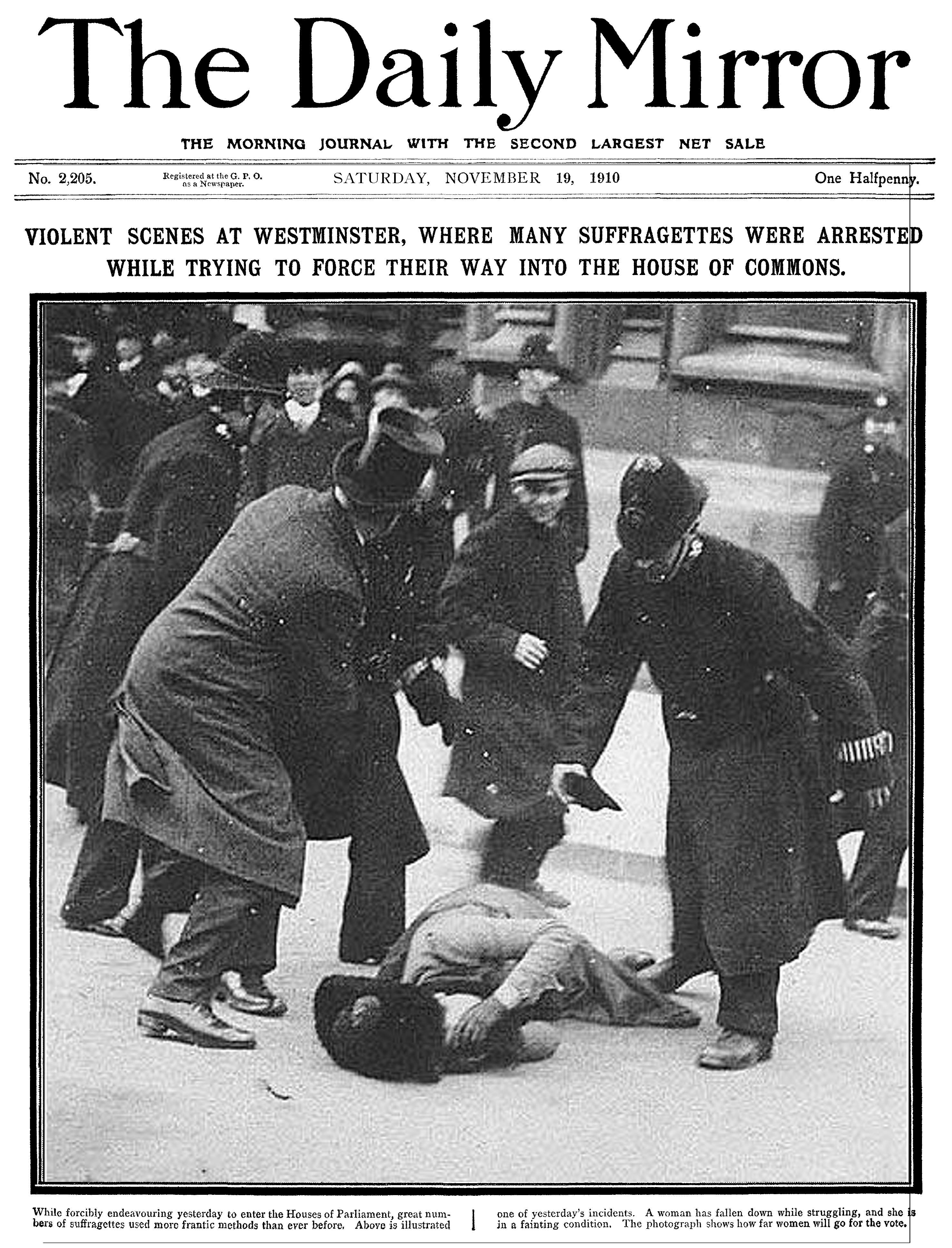
When power goes mad, obedience is complicity.

There comes a moment when not resisting becomes a form of complicity.
And that moment, today, has already passed.
We live in a world marked by brutality and injustice that recall a past any reasonable person would like to bury under a kilometer of dirt: genocides, wars of conquest, the explicit return of dictatorships.
But reading between the lines, three converging dynamics clearly emerge - dynamics that together are eroding what remains of our freedom, our democracy, and our humanity.
1. The return of imperialism (without restraints)
International rules are systematically trampled by those powerful enough to ignore them.
Russia invades Ukraine and remains unpunished - indeed, with the increasingly concrete possibility of being rewarded with territory.
The United States kidnaps heads of state, bombs sovereign countries, and openly threatens its allies, without facing any real consequences.
China effectively annexes Hong Kong in violation of the 1997 agreements and annually threatens 23 million Taiwanese with military force, while the rest of the world looks away in embarrassment.
Imperial powers impose their will through economic, military, and technological force.
Meanwhile, as spoiled heirs of these empires - particularly the American one - a handful of billionaires gamble with our future, unleashing immensely powerful technologies without democratic control, without accountability, without any mandate.
The very engineers behind the most widespread artificial intelligence models have admitted that they no longer fully understand how their algorithms make certain decisions. This is not a technical detail: it is a warning siren for our future.
This is not progress. It is domination.
And those who do not comply are crushed, marginalized, or made irrelevant: the students of Hong Kong, the hundreds of thousands of Ukrainians killed (perhaps in vain, if Moscow gets what it wants), or the dozens of Venezuelan civilians killed by U.S. bombings that no one talks about anymore.
2. Abuse of power becomes normal
Those in power increasingly abuse their positions at the expense of ordinary citizens.
This has always happened, of course. But today, in the age of digital transparency, it feels even more outrageous - almost a deliberate insult to our intelligence.
Just today, news emerged of a new raid by ICE, the U.S. federal immigration agency, in Minneapolis, ending with the killing of a woman. In the video, an agent is clearly seen shooting her point-blank in the head as she sat in the driver’s seat of a jeep - guilty of not immediately exiting the vehicle and of attempting to move it.
To the MAGA right, she was a dangerous extremist. To anyone watching that video without prejudice, she was a panicked person who posed no real threat. The woman was also American - a detail that matters for only one reason: it shows that no one is safe when the state acts outside the law.
And there is no need to look only at the United States.
During my electoral campaign in the Veneto region of Italy, I personally experienced abuses of power that should alarm anyone: illegal phone calls from the police to me and my wife aimed at intimidating me and preventing me from going into public squares to speak with citizens (which I did anyway), and systematic obstacles to the right to protest - such as when I tried to demonstrate alone in front of a right-wing convention.
“Small things,” some might say.
That’s how it always begins.
3. Extreme concentration of wealth
Wealth is concentrating in fewer and fewer hands. And this is not an abstract or moral issue - it is visible, daily, concrete.
Cities like Milan have become playgrounds for finance bros, investment funds, and real-estate speculation, rather than livable places for those born there or who work there. Only the blind can fail to see the change, deliberately encouraged by tax policies that would allow a billionaire like Jeff Bezos to pay roughly €200,000 a year in taxes by transferring his tax residence to Italy.
At the same time - taking Italy as an example - official statistics show that:
over 5.7 million out of 60 million people live in absolute poverty;
more than 96,000 people are homeless, a sharp increase compared to the previous decade;
in major cities, the number of people sleeping on the streets has grown by over 30% since 2019.
Meanwhile, stock markets continue to rise cheerfully, generating wealth almost exclusively for those who already have it.
How can all of this be considered “normal”? Where has our humanity gone?
Why is all this happening?
The billion-dollar question.
Because wealth and power have globalized, while democracy and the ability to regulate them have remained local, fragmented, and increasingly fragile.
Because technology - social media and artificial intelligence - makes it harder and harder for the average citizen to understand what is happening, let alone oppose it. Scandals last six hours before being buried by new ones. Those with money and staff control the narrative. The media, too often, act as megaphones or useful idiots.
Finally, because an increasingly individualistic culture has convinced us that “it’s none of our business.” Few would give up a vacation to vote. Even fewer would lose a day of work to protest. Almost no one would give up comfort or technology to boycott a power responsible for war crimes or genocide.
And no: changing course will not be easy or immediate. Historically, it has often taken major tragedies - wars, collapses, catastrophes - to reverse these dynamics. But waiting for them is not a strategy. It is surrender.
So what can we do?
Resist. Resist. Resist.
Abuses of power and wealth are the cancer of freedom: they erode democracy from within, destroy social trust, and block cultural and human development.
But concretely, what does resisting mean for an ordinary person?
1. Resisting imperialism
Inform yourself. Prepare. Understand why we live in a world dominated by brutes.
Knowledge remains the most powerful weapon we have. Perhaps this is why - again using Italy as an illustrative example - the latest national budget includes a €620 million cut to education spending.
From knowledge, from critical thinking, from knowing your rights and not being intimidated by institutions and the powerful, come boycotts, protests, conscious political choices, and informed voting.
This is exactly what, over three or four generations, eradicated institutional racism, legal sexism, and chemical weapons, for example—things that were still considered acceptable when our grandparents were alive.
2. Resisting impunity
Do not look the other way.
From the employer who bullies a colleague, to the police who do not respect the law (or do not know it), to politicians who monetize conflicts of interest - such as Giorgia Meloni’s book promoted by Donald Trump.
Talk about it. Speak up at dinner tables and on social media. File complaints. Report abuses. Will it cost you friendships? Yes. Probably friendships better lost than kept.
But when your children ask what you did in the face of injustice, you will be able to answer without lowering your gaze.
3. Resisting inequality
What we need are redistributive policies, nationally and globally.
A hundred years ago, many would have been scandalized by the idea of being taxed “a bit more” to guarantee, say, access to dental care for those who couldn’t afford it. Today, many would still be outraged at the idea of being taxed slightly more (less say 1%) to eradicate extreme poverty. For me, that would be the only ethical choice.
The same logic applies internationally: global taxes on multinationals and financial transactions could eliminate poverty worldwide without any real sacrifice for the vast majority of people. Unfortunately, society will still need years to move closer to these solutions.
In the meantime, start with something simple: do not get used to horror.
Be outraged when you see someone sleeping on the street. Always.
In 2026, in any society that calls itself “developed,” extreme poverty is a political crime. Countries like Italy could eliminate it with a minimal fraction of public spending. They choose not to. It is not normal for charity and NGOs to replace the state. It is not normal that people without food or housing are ignored because they are not an electorally interesting group.
It is absurd.
And it is inhumane.
Sorry for the long article, but my real hope for this year is that more and more people choose to resist - quietly or on the front lines. Every act matters.
Remember this: resisting is the one thing they cannot take away from you.
Full speed ahead.
My name is Andrea Venzon. I am a political activist, and I write to help build an independent political space - free from the blackmail of great powers and from resignation. If you like what you read, subscribe. And if you can, become a paid subscriber: it’s what allows me to keep writing, analyzing, and taking positions without masters.
Excellent article