![Andrea Venzon [English]](https://substackcdn.com/image/fetch/$s_!_TTE!,w_120,h_120,c_fill,f_webp,q_auto:good,fl_progressive:steep/https%3A%2F%2Fsubstack-post-media.s3.amazonaws.com%2Fpublic%2Fimages%2Facd73441-dd62-4692-b623-54f4cf7c2bb7_1231x1231.png)
Anthropic, You Are Not Welcome in Milan.
Unless you pay up to protect the workers you are displacing.

Tomorrow, Anthropic opens an office in Milan, where I live. The tech press is excited, the startup ecosystem is excited, and the mayor’s office will probably issue a congratulatory statement about innovation and the future of the digital economy.
I am not excited.
Let me be clear about what I am not saying. Anthropic builds remarkable technology - Claude, its AI assistant, is genuinely impressive, and I use it myself. The researchers behind it are serious people working on hard problems. What is in dispute is whether the global expansion of a company like Anthropic - without accountability, without redistribution, without any serious answer to the questions its technology raises - deserves the celebration it is receiving.
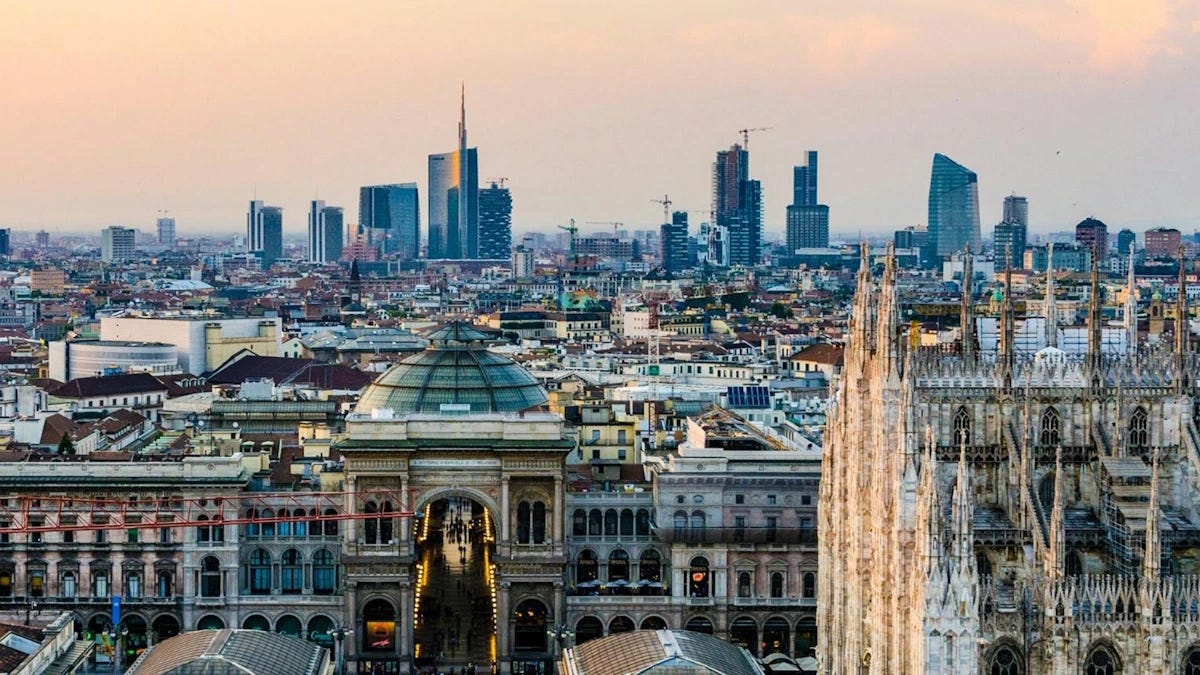
Anthropic’s arrival will create some jobs - a few hundred, perhaps, in sales and operations - and I do not dismiss that. But while Milan celebrates a few hundred arrivals, Anthropic’s models are quietly accelerating the displacement of millions of jobs across Europe and beyond: in legal services, financial administration, content production, customer support, every sector where cognitive work can now be automated at a fraction of its previous cost. The accountant in Turin, the paralegal in Rome, the journalist in Naples - none of them will be at the press launch tomorrow, and none of them will appear in the congratulatory statements.
The asymmetry is not accidental. It is the operating model.
Anthropic, like every major AI company, contributes nothing structured toward the workers its technology displaces. No levy on its API calls funds retraining programmes. No portion of its $61 billion valuation flows toward communities bearing the costs of automation. When a chemical plant opens in a city, it must account for the environmental costs of its operations - meeting standards, paying levies, accepting liability for its externalities. When an AI company deploys models eliminating tens of thousands of jobs in the regional economy, it faces no equivalent obligation. It collects the productivity gains, books the revenue, and leaves the social costs to public budgets and the individuals who bear them.
There is a second problem, deeper than the fiscal one.
Anthropic has been more honest than most AI companies about the risks of what it is building - publishing safety research, engaging with regulators, acknowledging publicly that it may be developing one of the most dangerous technologies in human history. But honesty about a risk is not the same as having it under control. Anthropic’s own researchers acknowledge genuine uncertainty about whether their models will remain aligned with human values as they grow more capable. The company is racing to deploy technology whose long-term behaviour it cannot fully predict - because, it argues, a safety-focused company at the frontier is preferable to ceding ground to less scrupulous competitors.
Perhaps. But that argument - we must build the potentially dangerous thing because someone worse might build it otherwise - does not constitute a guarantee of safety. Milan is not a testing ground. Its workers are not variables in a deployment model.
Banning Anthropic or prohibiting its technology is not what I am asking. What I am saying is that the terms on which companies like Anthropic expand into European cities (or elsewhere) should be negotiated rather than assumed. A social licence to operate in Milan should carry concrete obligations: a levy on local AI deployment directed toward a transition fund, binding commitments on skills development, transparency on which sectors the company’s models are displacing. These are not radical demands - they are the minimum that any industry causing significant structural disruption should meet.
The political class in Milan is so dazzled by the prestige of attracting a Silicon Valley name that it has forgotten to ask what the city is actually getting in return. A few hundred jobs and a logo on a coworking space, in exchange for normalising the presence of an industry restructuring the city’s economic foundations with no obligation to account for the consequences.
Anthropic, you are not unwelcome as a company. You are unwelcome on these terms. Come back when you are ready to have a real conversation about what you owe the city, the country, and the continent you are moving into - and the workers whose livelihoods your technology is reshaping.
That conversation is overdue. And someone needs to start demanding it.