![Andrea Venzon [English]](https://substackcdn.com/image/fetch/$s_!_TTE!,w_120,h_120,c_fill,f_webp,q_auto:good,fl_progressive:steep/https%3A%2F%2Fsubstack-post-media.s3.amazonaws.com%2Fpublic%2Fimages%2Facd73441-dd62-4692-b623-54f4cf7c2bb7_1231x1231.png)
AI Will Either Be A Tool of Imperialism Or of Liberation
We are the ones that get to choose.

Every transformative technology in history has carried within it two futures simultaneously - one in which it serves to concentrate power, entrench hierarchy, and extend the reach of those already dominant, and one in which it disperses opportunity, dissolves old barriers, and lifts people out of conditions they were previously unable to escape. The printing press enabled both the Reformation and centuries of propaganda. The internet promised radical democratisation of knowledge and delivered, alongside genuine liberation, mass surveillance and the most effective tools for manipulation ever built. Artificial intelligence is no different - except that the stakes are larger, the speed is faster, and the window in which the direction can still be shaped is narrower than it has ever been.
The question of which future AI produces is not a technical one. It is a political one. And at the moment, the political answer is being written almost entirely by people who were not elected to write it.
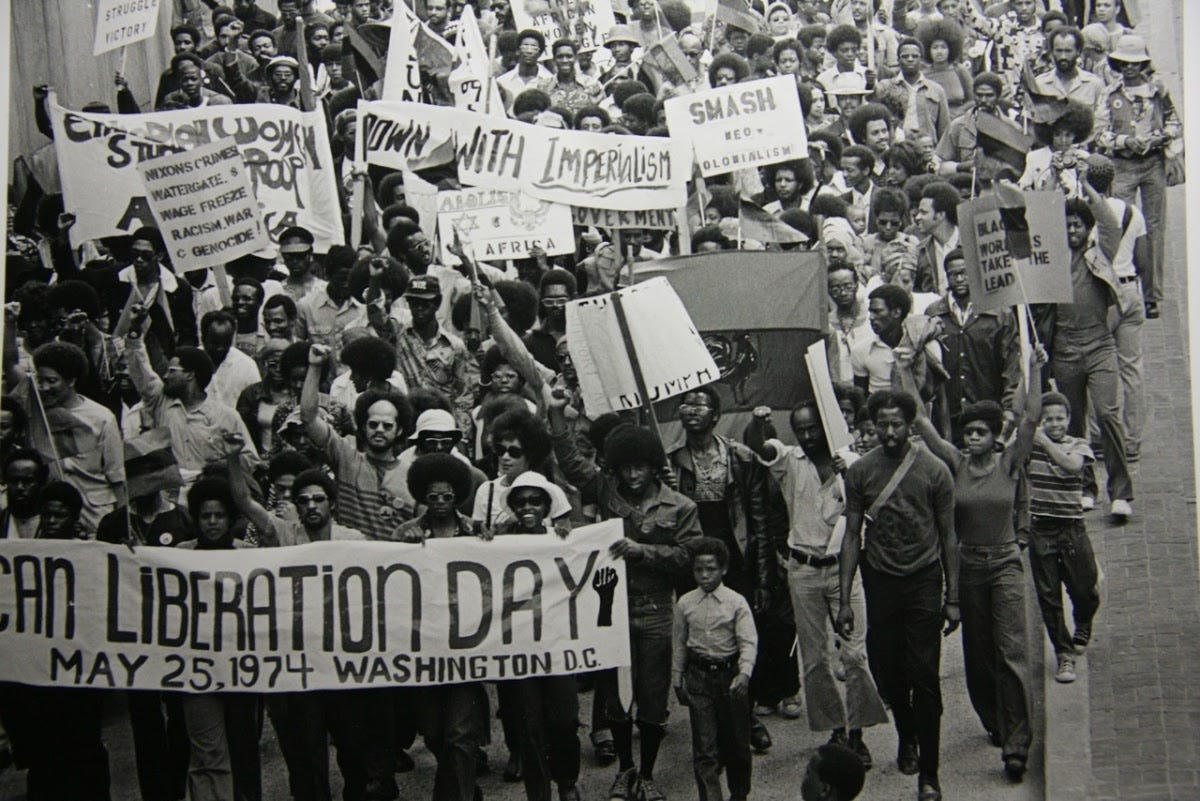
The imperialist case is not difficult to make, because the infrastructure of AI imperialism is already being built.
Consider what the current trajectory actually looks like from the perspective of a country in the Global South - or frankly, for most countries in the world. The most powerful AI systems in the world are owned by a handful of American companies - OpenAI, Google, Microsoft, Anthropic, Meta - and a smaller number of Chinese ones. These systems are trained on data extracted from users across the globe, the overwhelming majority of whom received no compensation and gave no meaningful consent to the use of their intellectual and cultural production as training material. The value generated from that data flows back, almost entirely, to shareholders and employees in San Francisco and Seattle, with token amounts directed toward the infrastructure of dependency - free or cheap access to tools that entrench reliance on foreign systems rather than building local capability.
This is a pattern with deep historical roots. Colonial economies were structured precisely to extract raw materials from the periphery, process them into valuable goods at the centre, and sell the finished products back to the countries that had provided the inputs. The AI economy replicates this logic with data as the raw material, and does so at a scale and speed that the colonial administrators of the nineteenth century could only have dreamed of. A Nigerian novelist, a Brazilian journalist, a Pakistani software developer: their words, their ideas, their cultural production fed the models that are now being sold back to them as productivity tools, with the profits flowing to people they will never meet and institutions they have no influence over.
Beyond the extraction dynamic, there is the question of dependency and control. A country whose critical infrastructure - healthcare systems, financial services, public administration, military logistics - runs on AI systems built and controlled by foreign powers is not a sovereign country in any meaningful sense. It is a client state with a more sophisticated interface. The geopolitical implications of this dependency are already visible in the way the United States and China are competing for AI influence across Africa, Southeast Asia, and Latin America, and also Europe - not out of philanthropic interest in development or to cooperate as peers, but because whoever controls the AI infrastructure controls the terms on which those economies operate and the data flows that feed the next generation of models.
And then there is the most dystopian scenario, which is not science fiction but a logical extension of dynamics already present: a world in which AI-driven productivity eliminates the need for most human labour, and the response of the owning class is not to share the gains but to provide a minimal universal basic income just sufficient to prevent uprising - a digital bread and circuses, keeping billions of people in a condition of managed dependency, their basic needs met just enough to forestall revolt while the decisions that shape their lives are made entirely by systems and the people who own them. This is not inevitable. But it is a future that the current distribution of power and the current absence of political response makes more rather than less likely.
The liberation case is equally real, and intellectual honesty requires taking it seriously rather than dismissing it as tech industry marketing.
The burden of physical and cognitive labour that has defined human existence for most of history is genuinely, not rhetorically, a form of suffering. The farmer working sixteen-hour days in a climate that is becoming hostile, the factory worker whose body is broken by repetitive strain at fifty, the clerical worker grinding through tasks that offer no meaning and no development: the liberation of human beings from the most grinding and degrading forms of work is not a trivial achievement, and AI has the genuine potential to deliver it at a scale and speed that no previous technology has managed. If the gains from that liberation are distributed equitably - a very large if, but not an impossible one - the reduction in human suffering could be extraordinary.
Access to knowledge and opportunity is another truly compelling argument. The child in a rural corner of the world, who currently has access to mediocre schooling, no specialist medical care, and no professional networks that might connect her to opportunity in the global economy is not in that position because of any failing of her own intelligence or ambition - she is in that position because of where she was born, a condition she had no role in choosing. AI, properly deployed and properly governed, has the potential to give that child access to the best educational content in the world, to diagnostic tools that can identify and address health conditions that currently go untreated, and to platforms that allow her talent to connect with global markets regardless of her geography. This is not guaranteed. But it is genuinely possible, and it would represent one of the most significant expansions of human opportunity in history.
The potential for AI to accelerate scientific progress - in medicine, in materials science, in climate solutions, in our understanding of biology - is real and already beginning to materialise. Diseases that have killed millions for generations are being approached with tools that would not have existed five years ago. The gap between what is scientifically possible and what is deployed in the lives of ordinary people remains enormous, but AI shrinks the time and cost required to cross it in ways that could save hundreds of millions of lives over the coming decades.
The future will not be either of these things in its pure form - it will be somewhere in between, as all technological futures have been. But “somewhere in between” is not a single point: it is a vast range of possible outcomes, and where on that range the world actually lands will be determined by political choices made in the next decade, many of them in the next few years.
The direction of the current trajectory is clear: toward concentration, dependency, and the extraction of value from the many by the few, with the compensation of just enough material comfort to prevent organised resistance. This is not because AI is inherently imperialist - the liberation scenarios are genuinely achievable - but because the interests currently driving AI development are the interests of the companies and individuals who stand to benefit most from the imperialist outcome, and those interests are, at the moment, almost entirely uncontested in the political arena.
This is why a political movement for human sovereignty over AI is not a luxury or an intellectual exercise. It is the mechanism by which the direction of this technology gets pushed toward the liberation end of the spectrum rather than the subjugation end - through governance frameworks that break up the concentration of AI capability, through international agreements that ensure the benefits of AI development flow to the countries and people whose data and labour made it possible, through fiscal policies that redistribute the gains of automation rather than allowing them to accumulate in a handful of balance sheets, and through democratic accountability for the systems that are increasingly making the decisions that shape our lives.
The choice between AI as an instrument of imperial domination and AI as a tool of human liberation is real. It will not be made by the technology itself, which has no preferences. It will not be made by the market, which will default to the outcome that benefits those with the most power to shape it. It will be made by politics - which means it will be made by whoever shows up to fight for it.
That is the argument for building something. Not eventually. Now.